


1. The production process of fired magnesia chrome bricks is generally similar. In order to eliminate the loosening effect caused by the expansion of spinel due to the reaction of MgO and CrO, AIO or iron oxides during the firing process of the brick, the synthetic co-sintering material can also be used to make magnesia chrome bricks. In addition, there are unburned magnesia chrome bricks, for example, unburned Wholesale Magnesia Chrome Brick combined with inorganic magnesium salt solutions.
2. The production process of unburned magnesia-chrome bricks is simple, the cost is low, and the thermal stability is good, but the high temperature strength is far less than that of fired bricks. In the late 1950s, a so-called “direct-bonded”Wholesale Magnesia Chrome Brick was developed. The characteristics of this kind of brick are pure raw materials and high firing temperature; high temperature phases such as periclase and spinel are directly combined, and low melting phases such as silicate are distributed in islands. Therefore, the high temperature of the brick is significantly improved. Strength and slag resistance.
3. The fine powder produced by co-grinding and calcining the compact with chrome ore and magnesia, and the method of making bricks with coarse magnesia particles is an effective measure to eliminate the loosening effect. The magnesia-chrome bricks made by this method are the same as ordinary Compared with Wholesale Magnesia Chrome Brick, bricks have lower porosity, higher compressive strength, softening temperature under load and flexural strength. The magnesia-chrome bricks made of chrome ore-magnesite powder compacts and synthetic magnesia-chrome sand calcined at high temperature have better slag resistance and high-temperature strength than other magnesia-chrome bricks.
Alkaline refractories with magnesium oxide content of more than 90% and periclase as the main crystal phase.
1. Generally, it can be divided into two categories: sintered magnesia brick (also known as fired magnesia brick) and chemically combined magnesia brick (also known as unburned magnesia brick). Magnesia brick with high purity and firing temperature are called direct-bonded magnesia brick due to the direct contact of periclase grains; bricks made of fused magnesia as raw materials are called fused re-bonded magnesia brick.
2. Magnesia brick has high refractoriness, good alkali slag resistance, high softening starting temperature under load, but poor thermal shock resistance. Sintered magnesia bricks are made of brick-making magnesia brick. After crushing, batching, mixing and molding, they are fired at a high temperature of 1550~1600 °C. The firing temperature of high-purity products is above 1750 °C. Unpoured magnesia bricks are made by adding appropriate chemical binders to magnesia, mixing, molding and drying.
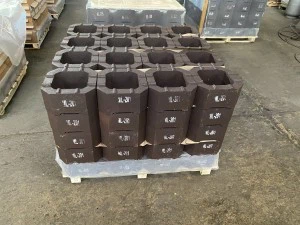
3. Mainly used for steelmaking basic open hearth, electric furnace bottom and furnace wall, permanent lining of oxygen converter, non-ferrous metal smelting furnace, high temperature tunnel kiln, calcined Wholesale Magnesia Chrome Brick and cement rotary kiln lining, furnace bottom and furnace of heating furnace Walls, glass kiln regenerator checker bricks and more!
4. Generally, it can be divided into two categories: sintered magnesia brick (also known as fired magnesia brick) and chemically combined magnesia brick (also known as unburned magnesia bricks). Magnesia brick with high purity and firing temperature are called direct-bonded magnesia brick due to the direct contact of periclase grains; bricks made of fused magnesia as raw materials are called fused re-bonded magnesia bricks.
Magnesia bricks have high refractoriness, good alkali slag resistance, high softening starting temperature under load, but poor thermal shock resistance. Sintered magnesia bricks are made of magnesia brick as raw materials. After crushing, batching, mixing and molding, they are fired at a high temperature of 1550~1600°C. The firing temperature of high-purity products is above 1750°C. Unpoured magnesia brick are made by adding appropriate chemical binders to magnesia, mixing, molding and drying.


